Your Outbound Operation Is Broken Before the Truck Leaves: Fixing the First-Mile Failures Inside Your Own Walls
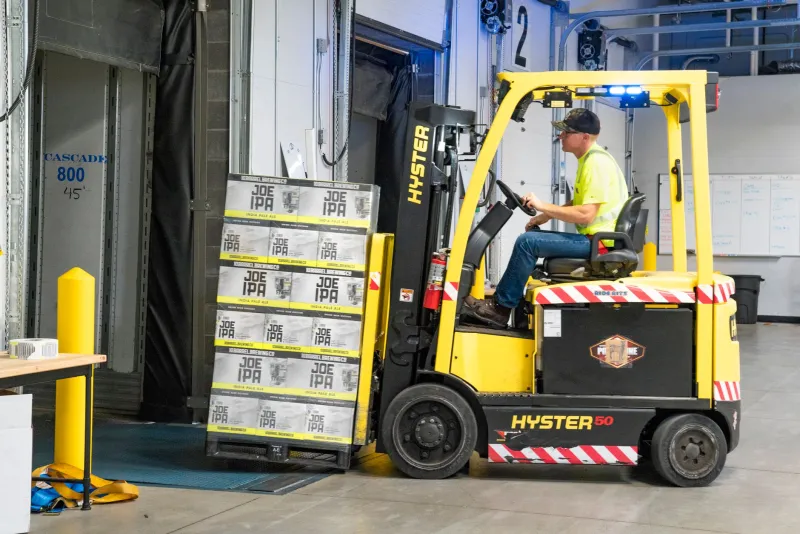
The supply chain conversation in the United States tends to center on forces beyond the warehouse wall. Overseas manufacturing disruptions, carrier capacity shortages, customs delays, and natural disasters all occupy significant space in risk management discussions. These are legitimate concerns, and planning for them is genuinely important.
What receives far less strategic attention is the category of disruption that originates entirely within a business's own four walls—in the receiving bays, the pick aisles, the packing stations, and the outbound docks where every fulfillment cycle begins. These are processes the business controls directly. They are measurable, improvable, and in many cases, quietly generating more downstream chaos than any external variable.
The reluctance to scrutinize internal operations with the same intensity applied to external risks is understandable. It is easier to frame disruption as something that happens to your supply chain than something your supply chain does to itself. But that framing is costing businesses real money.
The Cascade Mechanism: How Small Outbound Errors Become Large Downstream Problems
A mispicked order does not simply represent a single unit in the wrong box. It initiates a cascade. The customer receives incorrect product and initiates a return. The return requires processing, inspection, and restocking—each step consuming labor and time. Meanwhile, the correct item was not shipped, which means a sale is deferred or lost. If the error involves a high-velocity SKU, the inventory system may now reflect a phantom unit as available when it has already been shipped incorrectly.
Multiply this scenario across a fulfillment operation handling hundreds or thousands of orders per day, and the cumulative effect on inventory accuracy, customer satisfaction, and labor efficiency is substantial. Yet in many operations, pick error rates are tracked in isolation—reported as a quality metric—without connecting them to their downstream financial consequences.
The same cascade logic applies to labeling errors, incorrect lot or expiration date selection, improper packing that results in transit damage, and documentation inaccuracies that cause delays at the carrier or receiver end. Each of these failure points is internal. Each is preventable. And each tends to be underweighted in supply chain risk assessments because it does not carry the narrative drama of a geopolitical disruption or a natural disaster.
Where the Failures Are Actually Occurring
Based on common operational patterns across distribution-intensive businesses, the most consequential outbound failure points tend to cluster in four areas:
Receiving and putaway accuracy. Inventory errors introduced at inbound processing—incorrect counts, mislabeled locations, or SKUs stored in non-designated slots—create the conditions for pick errors before a single outbound order is processed. Garbage in, garbage out applies with full force to warehouse data.
Pick path and slotting design. Warehouse layouts that were configured for a previous product mix, or that have never been formally optimized, generate unnecessary travel time, increase pick fatigue, and create conditions where workers are more likely to select adjacent items incorrectly. For many US distribution operations, the slotting strategy has not been revisited in years—sometimes decades.
Packing station process control. Packing errors—wrong box sizes, insufficient dunnage, incorrect documentation—are frequently attributed to individual worker performance when they are often a function of inadequate process design. Without clear standard operating procedures and verification checkpoints at the pack station, error rates reflect the ceiling of what current processes allow, not the floor of what workers are capable of.
Outbound verification and load integrity. Trailer loading errors, incorrect shipment manifests, and missing documentation are among the most expensive outbound failures because they are typically discovered at the receiving end—sometimes days later, sometimes by a customer. At that point, the cost of resolution is multiples of what a dock-side verification step would have required.
Conducting an Outbound Operations Audit
Identifying these failure points requires a structured audit approach rather than a spot inspection. The following framework provides a starting point:
Step one: Error rate mapping. For each stage of the outbound process—pick, pack, label, load—calculate the error rate per thousand units processed. Where data does not currently exist to support this calculation, that absence is itself a finding. You cannot manage what you do not measure.
Step two: Root cause attribution. For each error category, distinguish between process failures, technology gaps, and training deficiencies. The corrective path is different for each. A process failure requires redesign. A technology gap may require a system configuration change or a new tool. A training deficiency requires structured intervention, not simply a reminder memo.
Step three: Cost per error calculation. Assign a dollar value to each error type, incorporating direct costs (labor for rework, return processing, replacement shipment) and indirect costs (customer service contacts, relationship impact, inventory accuracy degradation). This converts error rates from operational statistics into financial exposures that leadership can act on.
Step four: Verification checkpoint review. Map every existing quality checkpoint in the outbound flow and assess whether each checkpoint is actually functioning as a control or simply as a formality. Checkpoints that are routinely bypassed under volume pressure are not controls—they are documentation without function.
Low-Cost Fixes With Disproportionate Impact
Not every outbound improvement requires a capital investment. Several of the highest-impact corrections are fundamentally process and discipline changes:
- Mandatory scan-verify at the pack station for every outbound unit, using existing barcode infrastructure, can reduce pick error rates dramatically without new technology.
- Slotting reviews conducted quarterly to align product placement with current velocity data improve pick accuracy and reduce travel time simultaneously.
- Load verification checklists completed and signed before trailer departure create accountability and catch errors before they become customer problems.
- Inbound accuracy audits conducted on a random sample of every receipt ensure that putaway errors do not become outbound errors three weeks later.
The supply chain resilience conversation in the US has matured considerably over the past few years. Businesses have invested in supplier diversification, nearshoring strategies, and demand forecasting tools. These investments are valuable. But they are also rendered partially ineffective if the operation they are designed to support is generating its own disruptions from within.
The loading dock is not the end of your supply chain. For your customers, it is the beginning. Treating it with the same analytical rigor applied to external risk factors is not an operational nicety—it is a strategic requirement.