Where Your Pickers Walk: Five Slotting Errors Draining Labor Hours Every Shift
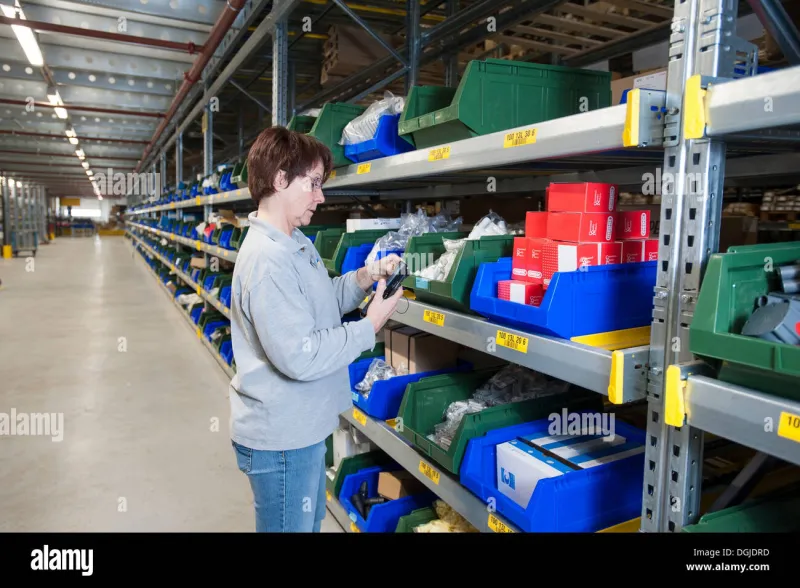
Photo: warehouse worker picking items from shelves aisle, via c8.alamy.com
Walk any mid-sized US warehouse at 2 p.m. and you'll see the same scene: pickers crossing aisles, reaching over pallets, and detouring around staging congestion. Most managers accept this as normal. It isn't. It's slotting failure, and it compounds with every pick, every shift, every day.
Slotting—deciding which SKU lives in which location—is one of the few warehouse levers that costs nothing to pull and pays immediately in labor. Here are the five mistakes that show up again and again, along with what each one costs.
1. Burying the Fast Movers
The 80/20 rule is ruthless in distribution: a small share of SKUs generates the overwhelming majority of picks. When those SKUs sit in the back corner—placed there years ago, or exiled to make room for a promotion—the entire operation pays a walking tax on every order.
The cost is straightforward arithmetic. If a picker averages 150 feet per walk to a far bin versus 40 feet to a golden-zone location, and that SKU is picked 60 times a day, you're adding more than a mile of walking daily for one SKU. Multiply across a poorly slotted catalog and the labor waste becomes a payroll line item.
2. Ignoring Pick-Path Logic
Slotting isn't just about frequency; it's about sequence. SKUs frequently ordered together should live near each other, and high-volume zones should be arranged so a pick route flows in one direction rather than zigzagging. Warehouses that slot by category alone—"all the fasteners together"—often force pickers into crossing patterns that add 20 to 30 percent more travel than necessary.
3. Letting Seasonal SKUs Squat in Prime Real Estate
December's hero product is January's dead weight. Yet seasonal items routinely keep their front-row slots long after demand collapses, while current fast movers languish in overflow. Without a scheduled re-slot, prime locations fill with whatever won last quarter.
The fix is a standing rule: any SKU in a top-velocity location whose 30-day pick rate falls below threshold gets evicted automatically. No committee, no debate.
4. Ignoring the Golden Zone
Waist-to-shoulder height is where humans pick fastest and safest. Stuffing that zone with slow movers, oversized cartons, or overstock forces constant bending, climbing, and ladder trips. Ergonomics isn't just a safety topic—every ladder trip is ten to twenty seconds multiplied across thousands of picks.
5. Slotting Once and Forgetting
Perhaps the most common error of all: slotting treated as a one-time project. Demand shifts, assortments change, new products launch. A slotting plan from eighteen months ago is a museum exhibit.
The Weekend Audit Framework
You don't need enterprise slotting software to make meaningful progress. Here's a compressed approach a small team can execute in two days:
Saturday morning — Extract the data. Pull 90 days of pick transactions by SKU and location. Rank SKUs by pick frequency; flag anything in a high-traffic location with a bottom-quartile pick rate.
Saturday afternoon — Map the flow. Sketch your pick paths. Identify the top 20 percent of SKUs by picks and mark their current locations. Count how many sit outside the golden zone or beyond the first two aisles.
Sunday — Reallocate and execute. Build a swap list: evict the squatters, promote the workhorses, cluster frequently co-ordered SKUs. Physically execute the moves, scan every location change, and verify system accuracy before Monday's shift.
Keep It Honest
After the re-slot, measure picks per labor hour for two weeks against the prior baseline. Most operations see a double-digit improvement in travel time alone. Then put a recurring re-slot review—quarterly is usually enough—on the calendar, because slotting is not a project. It's a habit.
The cheapest capacity expansion available to most warehouses isn't a new racking system or a hire. It's a few hundred fewer feet of walking per pick, hiding in plain sight on your own shelves.