Distributed and Depleted: A Framework for Deciding When Fulfillment Center Inventory Is Working Against You

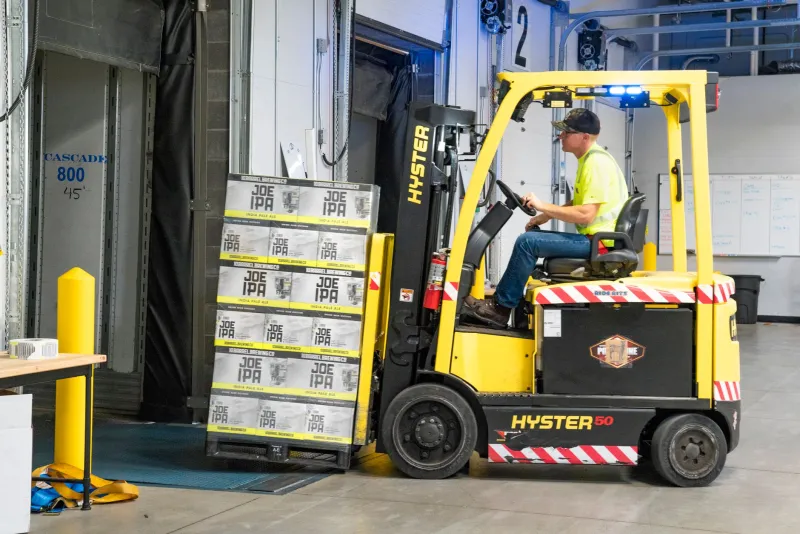
Photo: Oregon Department of Transportation, CC BY 2.0, via Wikimedia Commons
The pitch for distributed fulfillment is compelling on its surface. Position inventory closer to your customers, reduce transit times, qualify for two-day or next-day shipping thresholds, and compete more effectively with the largest players in your category. Third-party logistics providers and regional fulfillment networks have made this model accessible to businesses that would never have considered it a decade ago. The infrastructure is there. The promise is real.
What is less frequently examined is the full cost structure of maintaining inventory across multiple fulfillment nodes—and the conditions under which that cost structure becomes a liability rather than an asset. For a meaningful segment of US mid-market businesses, the distributed fulfillment model is consuming capital, generating synchronization problems, and accelerating obsolescence risk in ways that are difficult to see until the damage is already done.
The Hidden Economics of Multi-Node Inventory
The visible costs of distributed fulfillment are straightforward: storage fees per cubic foot, inbound receiving charges, pick-and-pack fees, and outbound shipping costs at each node. These are itemized on invoices and tracked in operational budgets. The less visible costs are where the economics become complicated.
Capital multiplication. When inventory is distributed across four regional fulfillment centers rather than held in a single location, the safety stock requirement at each node must account for local demand variability rather than aggregate demand variability. Because demand at the node level is less predictable than demand in aggregate—a statistical property known as risk pooling—the total safety stock required across all nodes is significantly higher than what a centralized model would require. For businesses with 500 or more active SKUs, this capital multiplication effect can represent a substantial and largely invisible inventory investment.
Synchronization failure. Maintaining accurate, real-time inventory records across multiple fulfillment centers requires integration between the fulfillment provider's warehouse management system and the retailer's own inventory platform. When that integration is imperfect—and it frequently is—the result is inventory synchronization errors: overselling at one node, phantom stock at another, and fulfillment delays that undermine the speed advantage the distributed model was designed to deliver.
Obsolescence acceleration. Inventory stranded at a fulfillment node far from where demand is actually occurring ages faster than inventory held centrally and allocated dynamically. A SKU that sells briskly in the Northeast but slowly in the Southwest will accumulate excess stock at the Southwest node while the Northeast node faces replenishment pressure. Without sophisticated inter-node transfer capabilities—which most third-party fulfillment arrangements do not support cost-effectively—that imbalance compounds over time.
When Centralization Is Actually Cheaper
The case for centralized inventory with optimized outbound shipping rests on a different set of assumptions than the distributed model. It accepts a slightly longer average transit time in exchange for lower total inventory investment, simplified operations, and reduced synchronization risk. For many product categories and customer expectations, that trade-off is favorable.
Consider a consumer goods brand selling through its own e-commerce channel and two marketplace platforms. Its current configuration includes inventory positions at three regional fulfillment centers operated by a third-party logistics provider. A cost analysis across a 12-month period reveals the following:
- Total carrying cost across three nodes: $340,000
- Inventory synchronization errors resulting in canceled orders or expedited reshipping: $28,000
- Obsolescence write-offs from imbalanced node inventory: $47,000
- Total distributed fulfillment cost: approximately $415,000
Under a centralized model with a single fulfillment location and two-day ground shipping coverage to approximately 70 percent of the US population, the analysis produces:
- Total carrying cost at one node: $210,000
- Incremental shipping cost to reach customers outside two-day ground coverage: $38,000
- Synchronization error cost: negligible
- Total centralized fulfillment cost: approximately $248,000
The distributed model costs this business $167,000 more per year than centralization—despite the conventional assumption that proximity to customers reduces cost.
A Diagnostic Framework for Supply Chain Leaders
The comparison above is illustrative, but the inputs will vary significantly by business. The following diagnostic questions provide a structured starting point for evaluating whether your current fulfillment configuration is working for or against your margins.
What percentage of your SKUs generate meaningful demand at each node? If more than 30 percent of your active SKUs generate fewer than five units of demand per month at a given fulfillment location, that node is carrying inventory that would be better held centrally and shipped on demand.
What is your actual inventory synchronization error rate? Pull fulfillment data for a 90-day window and identify orders that were canceled, delayed, or re-routed due to inventory discrepancies between nodes. If this rate exceeds one percent of order volume, your synchronization infrastructure is not performing at the standard the distributed model requires.
What share of your customers actually benefit from reduced transit times? Ground shipping transit time maps from major carriers show two-day coverage from a single Midwest location reaching a majority of the continental US population. If your customer base is geographically concentrated rather than nationally distributed, the speed advantage of multi-node fulfillment may apply to a smaller share of your orders than assumed.
What is your SKU obsolescence rate by node? If certain fulfillment locations consistently generate end-of-season or end-of-life write-offs at rates higher than your aggregate obsolescence target, those nodes are holding inventory that demand does not justify.
Matching Fulfillment Architecture to Business Reality
Distributed fulfillment is not inherently inefficient. For businesses with genuinely national demand distributions, high-velocity SKUs, and robust inventory synchronization infrastructure, the model can deliver the competitive advantages it promises. But those conditions are specific, and many businesses operating distributed networks do not fully meet them.
The value of running this diagnostic is not to arrive at a predetermined conclusion about centralization. It is to ensure that the fulfillment architecture a business operates is matched to its actual demand geography, SKU profile, and synchronization capabilities—rather than to a general assumption about what modern fulfillment should look like. In supply chain management, the right configuration is always the one that serves your specific operational reality, not the one that sounds most sophisticated in a sales conversation.